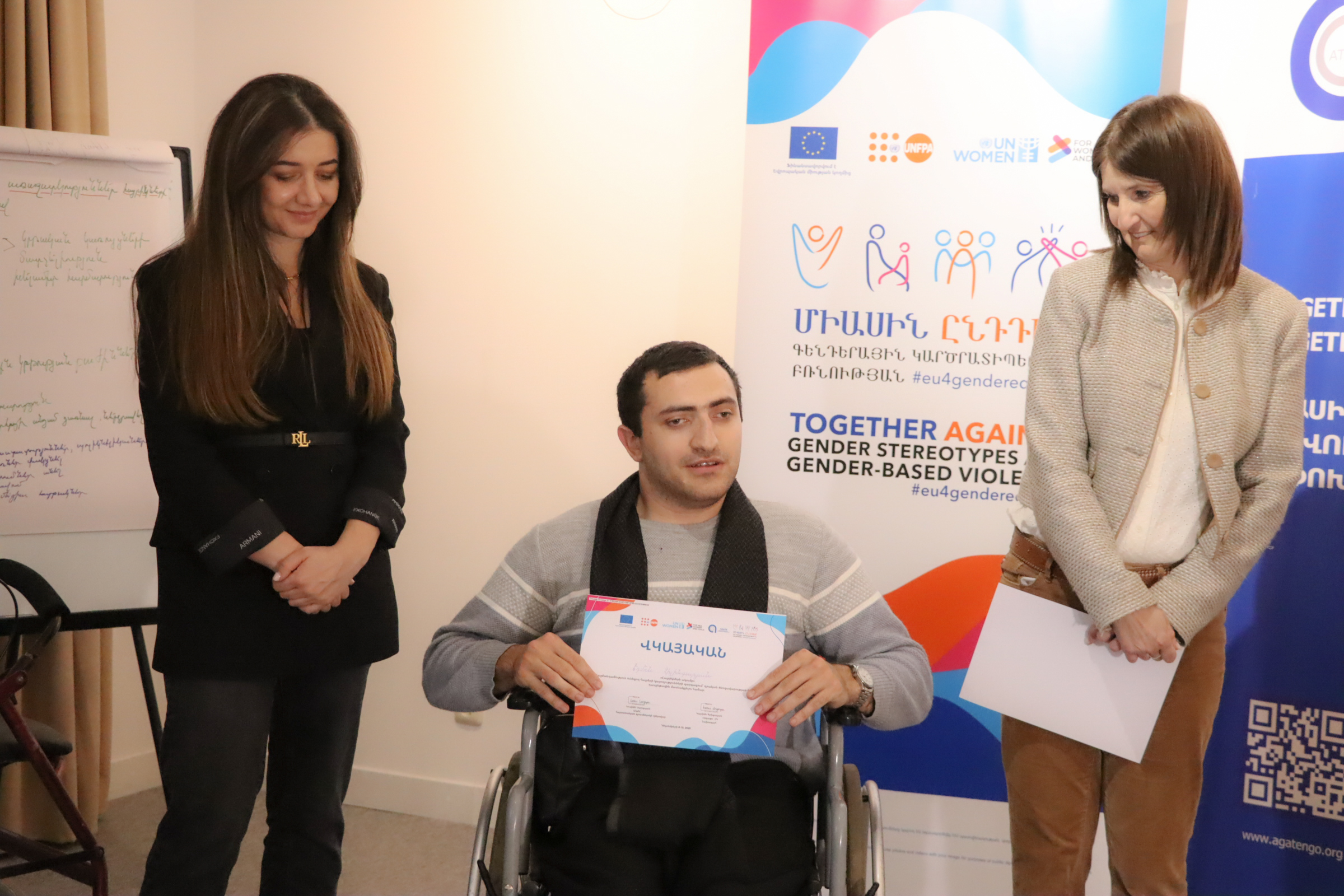
“I had never even heard of a workshop on this topic before. This was the first one I came across, and I was lucky enough to take part in it. I hope the knowledge I gained here will be useful in the future,” says Edmon Chilingaryan.
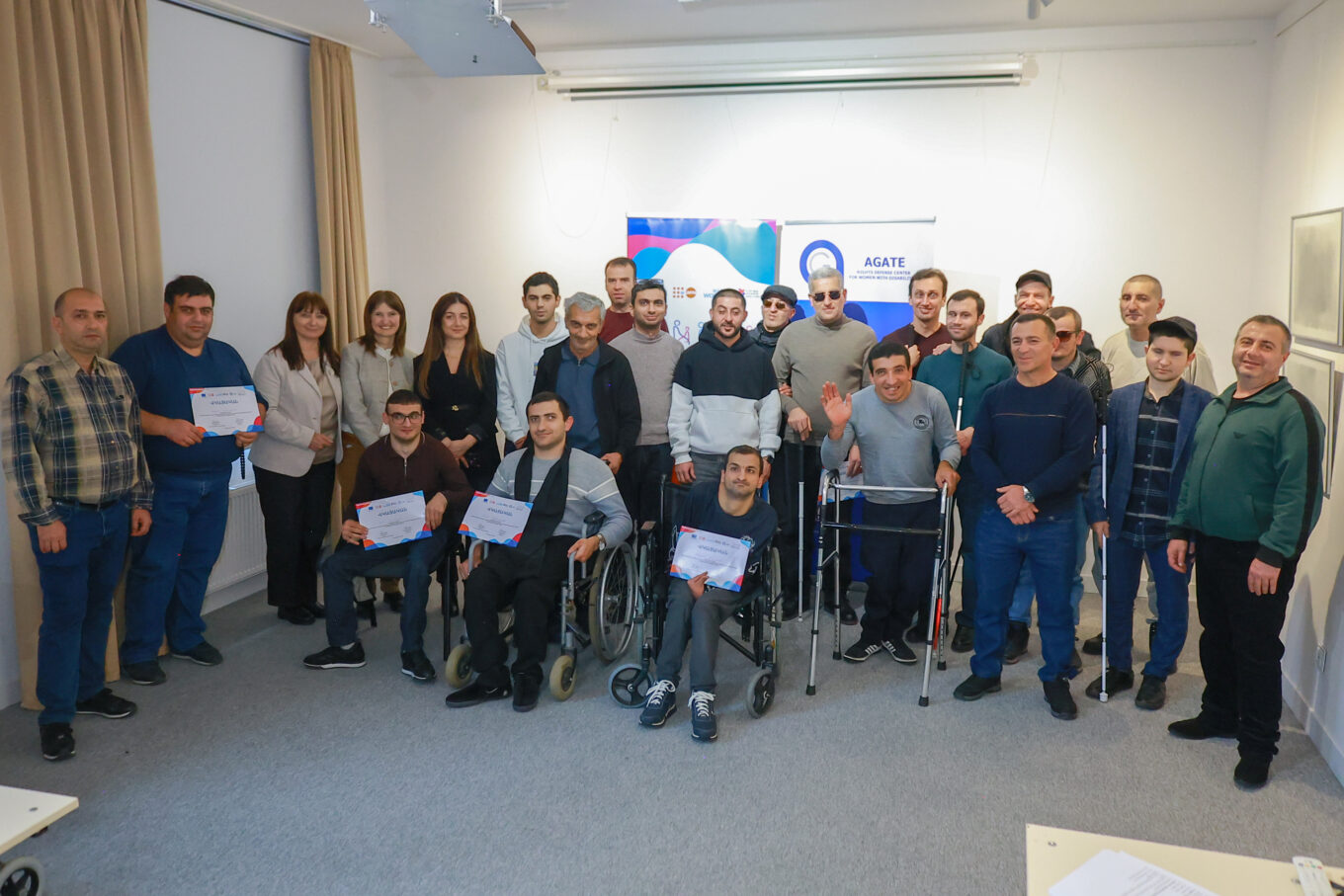
Twenty-four-year-old Edmon is one of the 20 men who participated in the “Papa Club” workshop on December 8–10, 2025. The workshop was implemented with the financial support of the European Union, in cooperation with the UNFPA in Armenia Office and the “Agate” Rights Defense Center for Women with Disabilities NGO.
“Our workshop addresses two types of discrimination at once: gender-based and disability-based stereotypes. There is a widespread belief in society that having and raising a child is an additional burden for men with disabilities. Through this workshop, the success stories of participants, and their enthusiasm, we are challenging and breaking these stereotypes,” said Karine Grigoryan, President of “Agate” NGO.
Within the framework of the “EU 4 Gender Equality: Together Against Gender Stereotypes and Gender-Based Violence” programme, Papa Clubs operate in the Lori, Tavush, Shirak, and Aragatsotn regions of Armenia, as well as in Yerevan. However, this workshop marked the first intensive programme specifically designed for men with disabilities.
“Ensuring equal opportunities for all is a core value for us. The policies of the UNFPA and the ‘EU 4 Gender Equality’ programme are grounded in inclusiveness. From this perspective, the idea of establishing a “Papa Club” for current and future fathers with disabilities fully aligns with our mandate. To build an inclusive and equal society, everyone must have the opportunity to participate and grow,” said Taguhi Harutyunyan, “EU 4 Gender Equality” programme coordinator, Gender Analyst, UNFPA in Armenia.
One of the workshop facilitators, Sipan Asatryan, who also has a disability and is the father of two daughters, noted that at the initial stage, they were concerned about recruiting participants and ensuring the accessibility of the workshop modules.
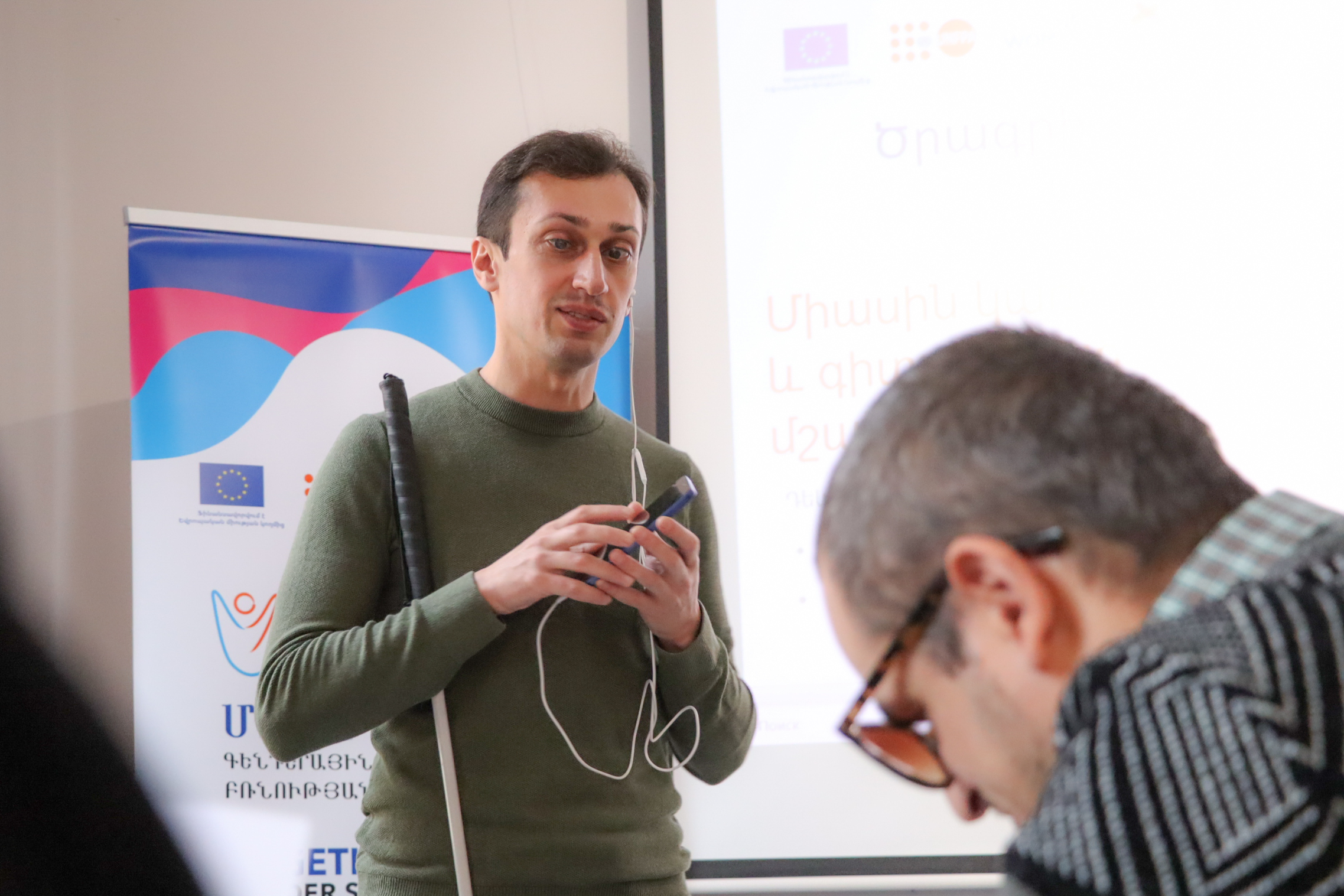
“The workshop proved to be highly effective and met our indicators and expectations. This was evident in the participants’ honest stories, their active engagement in practical exercises, and their initiative to create a mutual support network, where experienced fathers can share their knowledge and advice online,” he said.
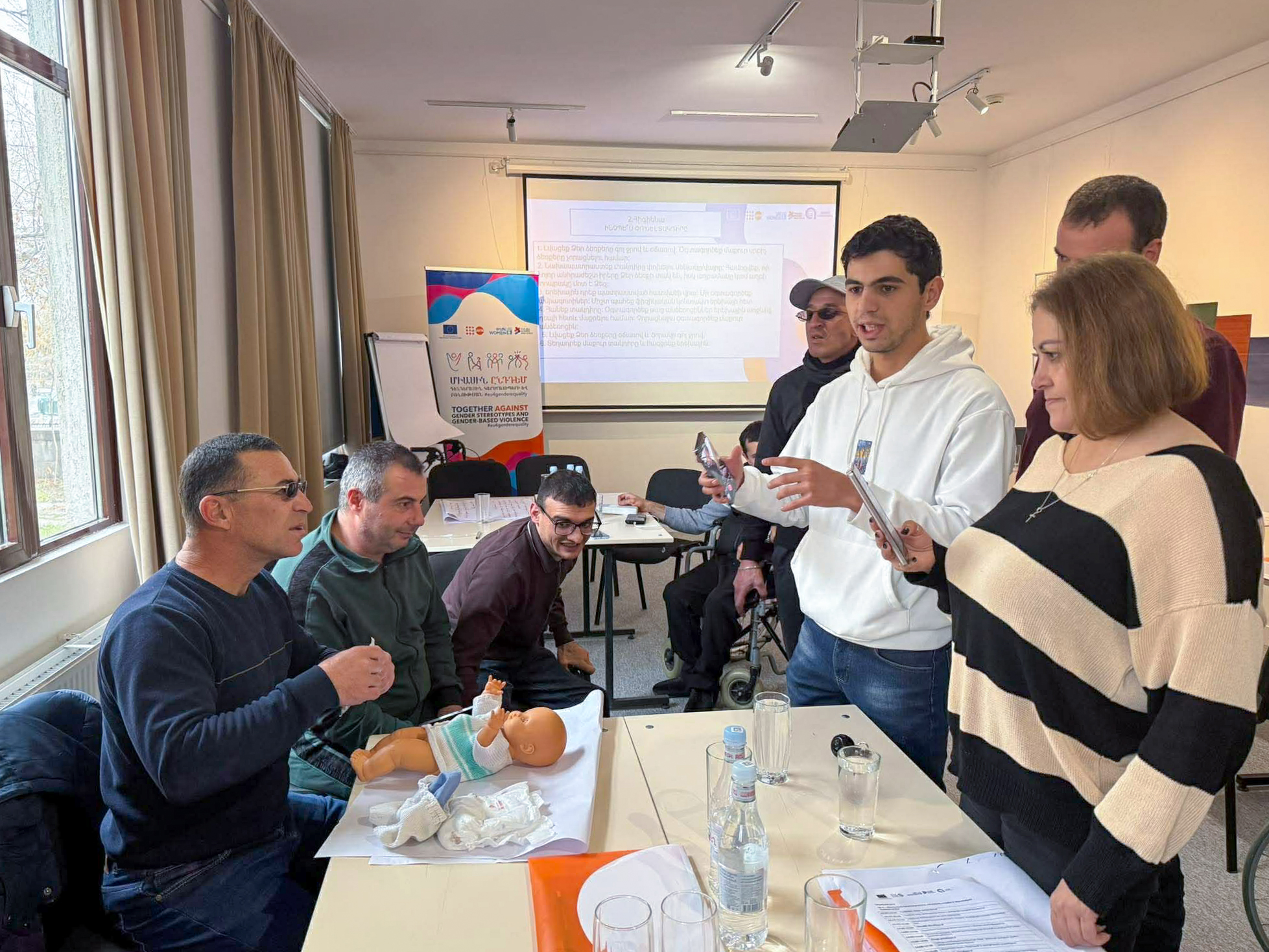
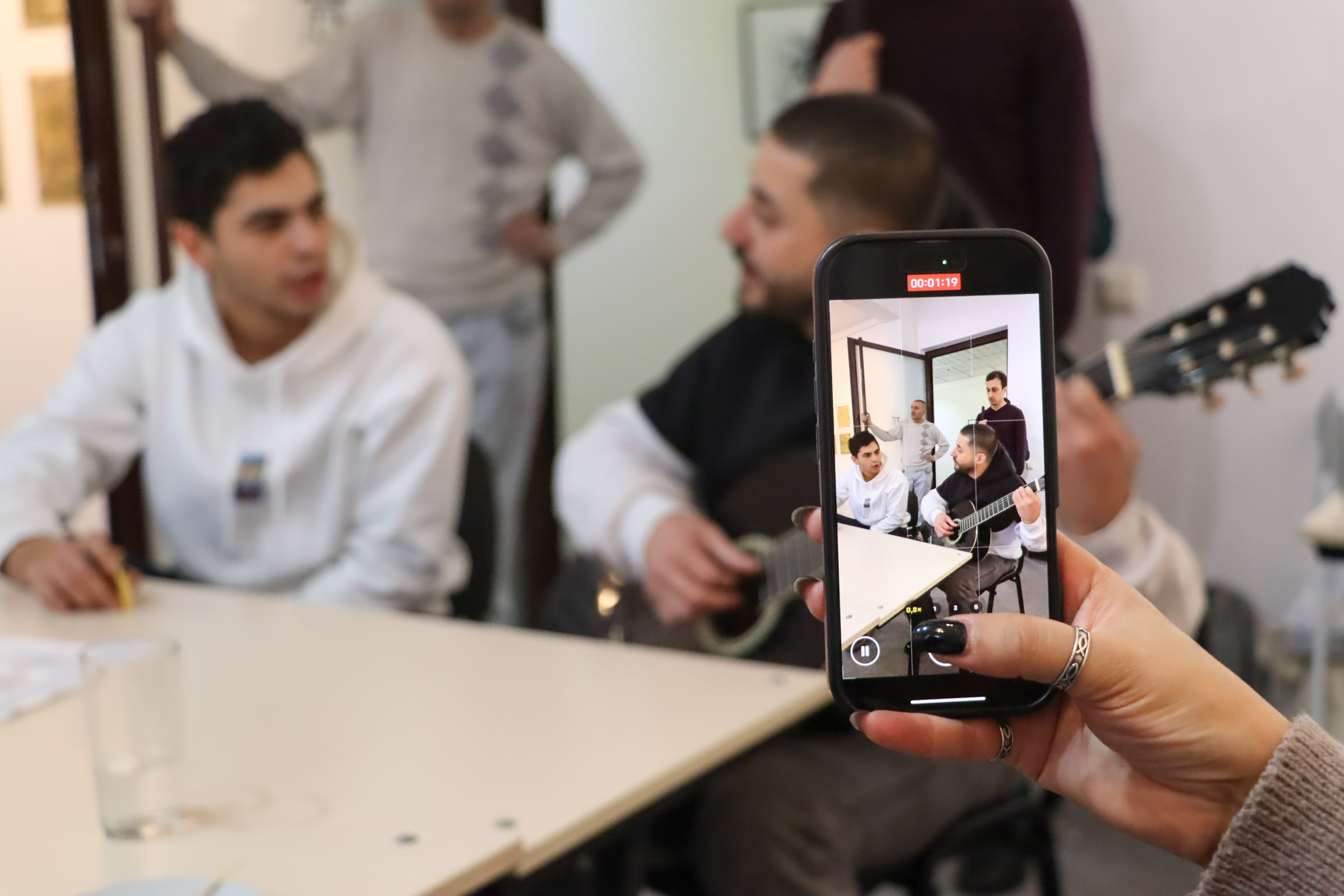
During the workshop, participants were also introduced to and provided with various assistive devices.
“To take a walk with a child and ensure their safety, we must first feel safe ourselves. If we encounter obstacles, this inevitably creates stress for the child as well. Alongside accessible urban environments, the use of assistive devices is essential for ensuring safety. During the workshop, we became familiar with these tools, which I will definitely use while caring for children,” said Patvakan Revazyan, a workshop participant.
The youngest participant, Ashot Tadevosyan, plans to share the knowledge he gained with his peers before starting a family and to apply it in practice. He is confident that social stereotypes can only be overcome through open discussion.
“The family is a fundamental unit of society and the nation. Sometimes we encounter very involved fathers, but their experience remains within a closed circle. They do not talk to relatives or friends or share their experiences, which is why positive practices do not spread. I intend to speak openly and share the knowledge I have gained in my community, because without continuity, such courses cannot have a long-term impact,” he said.
This article is published in the framework of the “EU 4 Gender Equality: Together against gender stereotypes and gender-based violence” programme (phase 2), funded by the European Union, implemented jointly by UN Women and UNFPA.
Its content is the sole responsibility of “Agate” NGO and does not necessarily reflect the views of the European Union, UN Women and UNFPA.