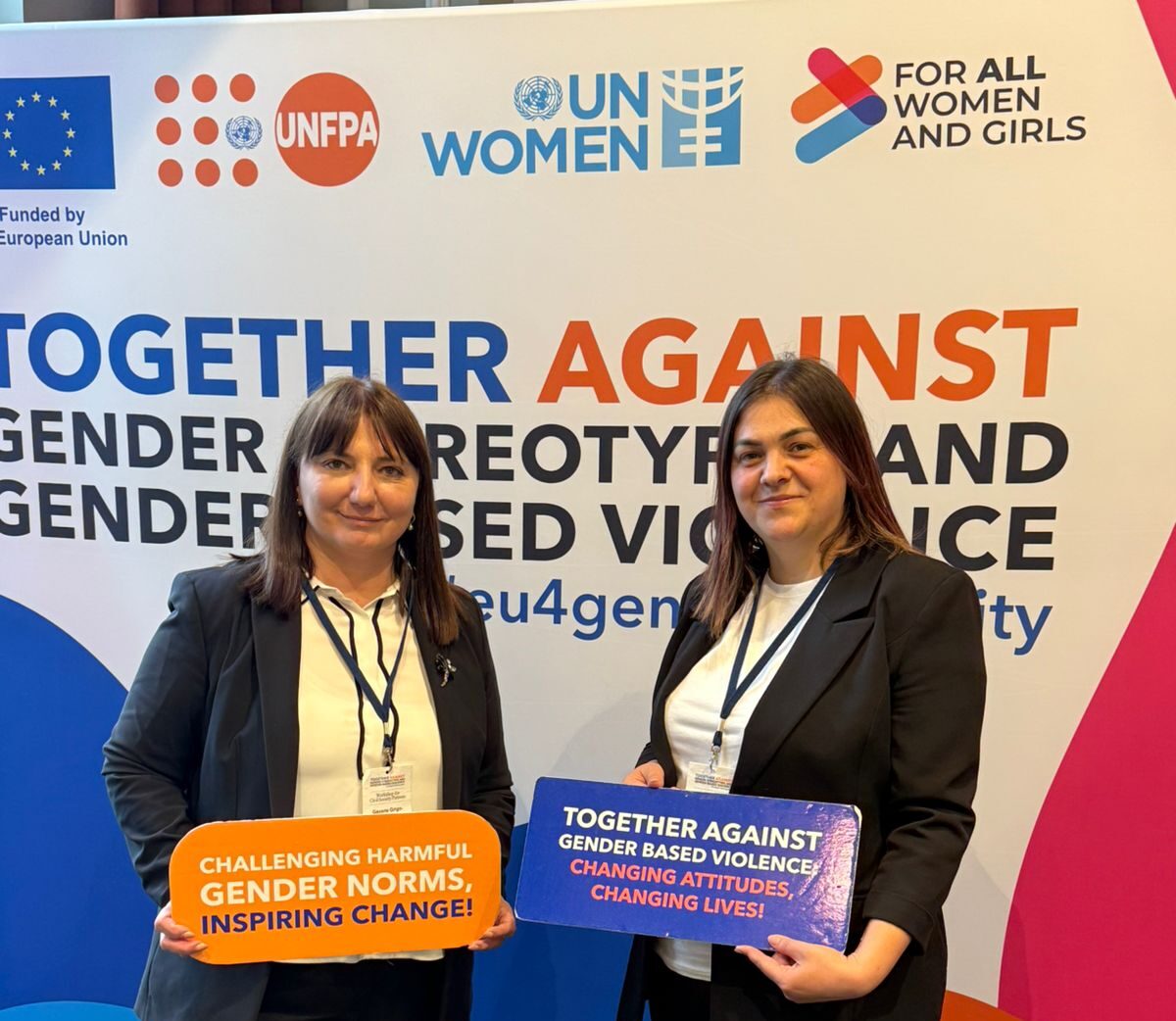
The EU4GenderEquality Civil Society Partners Conference was held in Brussels, bringing together more than 60 changemakers from Armenia, Belarus, Georgia, Moldova, and Ukraine. The conference served as a platform to reflect on lessons learned, strengthen regional cooperation, and shape future approaches to advancing gender equality across the region.
“Agate” Rights Defense Center for Women with Disabilities NGO was represented by Gayane Grigoryan, Program Officer, who shared the organization’s experience and presented the projects implemented for persons with disabilities within the framework of the EU4GenderEquality Programme.
During the discussions, Gayane Grigoryan emphasized the importance of inclusive and intersectional approaches, noting that gender equality cannot be fully achieved without ensuring the meaningful participation, accessibility, and leadership of women and girls with disabilities.
Together with partners from across the region, she discussed the barriers that continue to prevent women with disabilities from full participation in social, economic, and public life, as well as practical solutions, partnerships, and opportunities for regional collaboration to reach those furthest behind.
“We strongly believe that inclusion is not about inviting women with disabilities to the table — it is about making sure the table is designed with them from the very beginning. I am grateful for the valuable exchange, inspiring discussions, and the opportunity to contribute to stronger, more inclusive gender equality policies across the region,” said Gayane Grigoryan.
During the conference, UN Women Europe and Central Asia Deputy Regional Director Elisa Fernandez Saenz highlighted that 9 out of 10 people worldwide hold at least one bias against women. These discriminatory social norms continue to affect all areas of life, from the unequal distribution of care work to women’s participation in leadership and responses to gender-based violence.
As the EU4GenderEquality Programme concludes its second phase and prepares to enter its third, the conference provided an important opportunity for civil society partners to review achievements and develop more effective and inclusive strategies for promoting gender equality throughout the region.